Packet Traffic

How it works
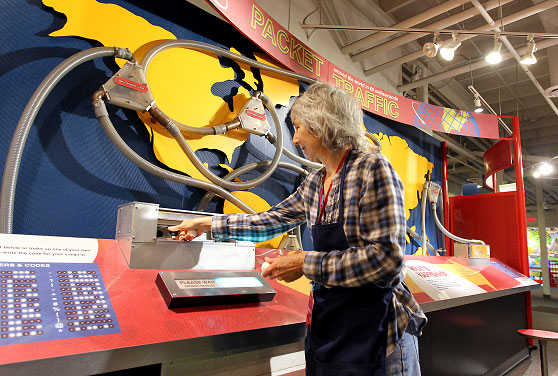
- Choose a character from the blue sign to e-mail to Tokyo. Notice the code of black and white dots next to your choice.
- Use the black and white balls to write the code for your e-mail in the COMPOSE tray.
- Send your e-mail. What happens to your email?
- Move to the INBOX. Watch as the e-mail arrives. Does the pattern of the black and white balls match the character you sent? Check the red sign next to the INBOX to find out.
What's going on?
When you send a friend an e-mail, how many different computers do you think are used? There's the computer on your own desk, of course, and another one where your friend is sitting. But in between your two computers, there are probably about a dozen other computers needed to get the email from your computer to your friend’s. Collectively, all the world's linked-up computers are called the Internet. How do they talk to one another? Let's take a closer look!
Most data moves over the Internet through packet switching. Suppose you send an email to someone in China. If the entire email was sent to China at once, it would take longer to get there, and the larger amount of data would result in high traffic conditions, quickly clogging the Internet.
Instead your email is broken up into tiny pieces called packets. Each one is tagged with its destination and sent on its way separately. In theory, all the packets could travel by totally different routes. When they reach their destination, they are put back together in the right order to make your email again.
Try this at home!
What you'll need:
A computer, tablet, smart phone, or any device that allows you to send and receive e-mail.
What you'll do:Use e-mail to write a continuous story with your friends. You start the story by writing the first paragraph, and then send it to a friend by email. Ask your friend to continue the story by adding a new paragraph. Then, that friend should add a paragraph and send the story to a third friend who will add another paragraph. Have as many friends as you like contribute to the story.
When the last paragraph has been added, have that friend e-mail the finished story to everyone who participated. When the finished story makes it back to you, think about how each paragraph was broken into small packets, and the number of computers needed to send and reassemble those packets, each time the story was emailed.
How much sense would the story make if the packets were not put back in the correct order?
In the real world
Packet switching was first used for military purposes in the early 1960s and then used for small networks in 1968.
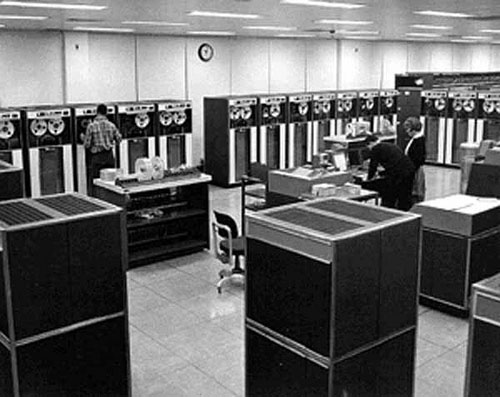
Today this method of sending data across networks is one of the basic networking technologies behind the internet. Packet switching makes it possible to send large amounts of data over the Internet, anywhere in the world, quickly.